
About the Order
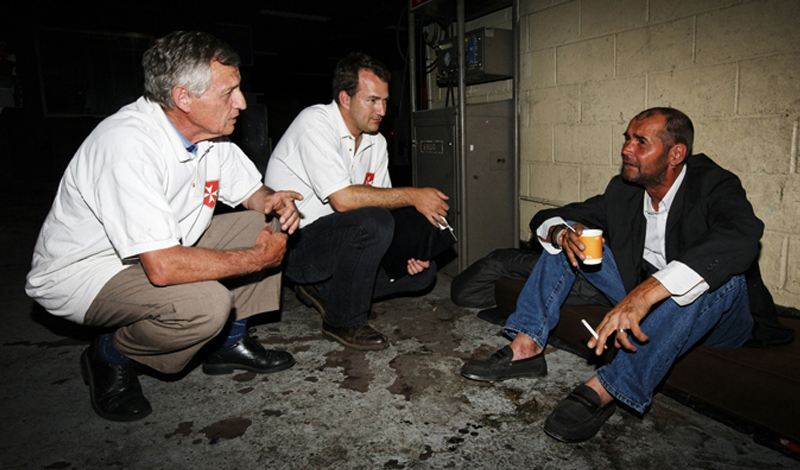
The Sovereign Military Hospitaller Order of St. John of Jerusalem of Rhodes and of Malta is one of the oldest Catholic orders and therefore one of the longest-serving institutions of Christian civilisation. Its aim is to help all those in need, without distinction. Traditionally the Order concentrated above all on running hospitals, which is why its members are also called Hospitallers; the name Knights of St. John is used as well. The name Knights of Malta goes back to the 16th century, when the Order received the island of Malta in the Mediterranean.
The Order was founded in Jerusalem in the 11th century and has fulfilled its mission without interruption for more than 900 years. It is subject to no state or international organisation, and its independence gives it a unique diplomatic position in international conflicts and in bringing help quickly to crises anywhere in the world. The seat of the Order has been in Rome since 1834.
The Order has been present in the Czech lands without interruption since the 12th century. Historically it owned land, estates, villages and whole towns in Bohemia, Moravia and Silesia (Strakonice, for example). It has always concentrated on giving effective help to those in need. During the First World War and for several years afterwards, for instance, it ran hospital trains that cared for wounded soldiers: eight such trains travelled more than a million kilometres during the war and carried hundreds of thousands of wounded and sick.
Today the Order's work in the Czech Republic centres on the elderly, people with disabilities and others in need. It relies on a wide network of professionals and volunteers in the centres of Maltézská pomoc, o.p.s. and in Česká maltézská pomoc České Budějovice, o.p.s.
The Grand Priory of Bohemia is one of the Order's six Grand Priories; the others are those of Rome, of Lombardy and Venice, of Naples and Sicily, of England and of Austria. Alongside them, the Order has national associations in many countries on five continents.
Detailed information about the Order, its work and its history is published on the Order's international website, available in English, Italian, French, German and Spanish.